STEAM EDUCATION
INTRODUCTION:
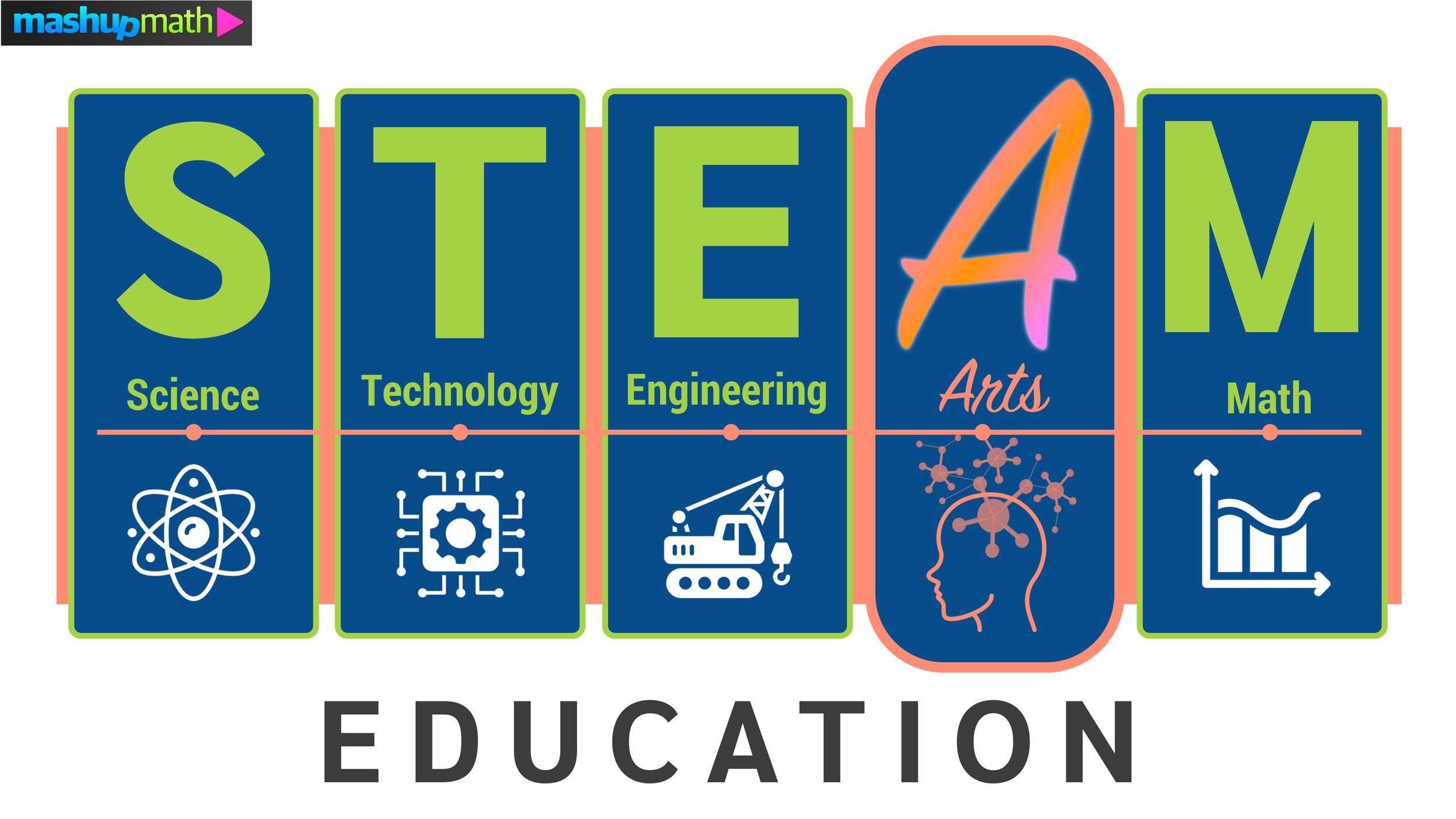
In an ever-evolving world driven by innovation and technological advancement, education plays a crucial role in preparing students for the challenges and opportunities of the future. STEAM education, which integrates Science, Technology, Engineering, Arts, and Mathematics into a cohesive interdisciplinary approach, has emerged as a powerful framework for fostering creativity, critical thinking, and problem-solving skills among learners of all ages.
At its core, STEAM education recognizes the interconnectedness of these disciplines and seeks to bridge the gap between traditional silos, encouraging students to explore the intersections and synergies between science, technology, engineering, arts, and mathematics. By incorporating hands-on, inquiry-based learning experiences, STEAM education aims to cultivate a deep understanding of core concepts while nurturing a spirit of curiosity, experimentation, and innovation.
The inclusion of arts within the STEM framework transforms STEM into STEAM, acknowledging the vital role of creativity, aesthetics, and design thinking in the innovation process. Through artistic expression, students are encouraged to think outside the box, explore alternative perspectives, and approach problems with imagination and ingenuity.
STEAM education goes beyond rote memorization and standardized testing, emphasizing active engagement, collaboration, and real-world application of knowledge. Students are empowered to become active participants in their learning journey, working on authentic projects, solving authentic problems, and making meaningful connections between classroom learning and the world around them.
STEAM education stands for Science, Technology, Engineering, Arts, and Mathematics. It's an interdisciplinary approach to learning that integrates these subjects into a cohesive curriculum, emphasizing creativity, critical thinking, problem-solving, and innovation.
Here's a detailed overview of STEAM education:
1. Science:
In STEAM education, science encompasses a wide range of disciplines, including biology, chemistry, physics, earth sciences, and environmental science.
Students engage in hands-on experiments, investigations, and inquiry-based learning activities to explore scientific concepts and phenomena.
Through science education, students develop critical thinking skills, learn to ask questions, make observations, analyze data, and draw evidence-based conclusions.

2. Technology:
Technology education focuses on understanding how technology works, its impact on society, and its applications in various fields.
Students learn to use digital tools, software applications, and programming languages to design, create, and innovate.
Technology education also emphasizes digital literacy, cybersecurity, and responsible use of technology in an increasingly digital world.
3. Engineering:
Engineering education introduces students to the principles of engineering design, problem-solving methodologies, and the engineering design process.
Students engage in hands-on engineering challenges, design projects, and real-world problem-solving activities.
Engineering education fosters creativity, innovation, teamwork, and collaboration as students work together to design and build solutions to complex problems.
4. Arts:
Arts education includes visual arts, performing arts, music, dance, and theater, providing students with opportunities for self-expression, creativity, and aesthetic appreciation.
Through arts integration, students explore connections between art and other subjects, such as science, mathematics, and technology.
Arts education promotes creativity, imagination, empathy, and cultural awareness, enhancing students' overall cognitive, emotional, and social development.
5. Mathematics:
Mathematics education emphasizes mathematical concepts, skills, and problem-solving strategies, including arithmetic, algebra, geometry, statistics, and calculus.
Students learn to think mathematically, reason logically, and apply mathematical principles to solve real-world problems.
Mathematics education also fosters quantitative literacy, mathematical modeling, and data analysis skills, essential for success in various academic and professional fields.
Benefits of STEAM Education:
- Interdisciplinary Learning: STEAM education promotes interdisciplinary learning, encouraging students to make connections between different subjects and apply their knowledge and skills in diverse contexts.
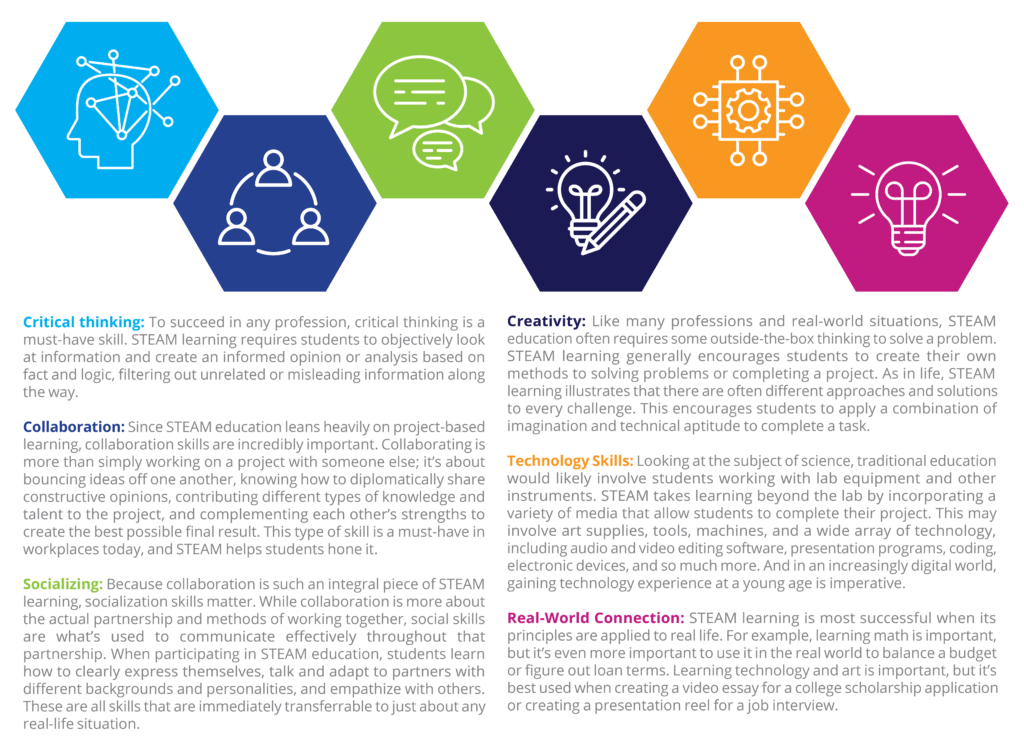
- Creativity and Innovation: By integrating arts and design thinking into STEM disciplines, STEAM education fosters creativity, imagination, and innovation, empowering students to think outside the box and develop original solutions to complex problems.
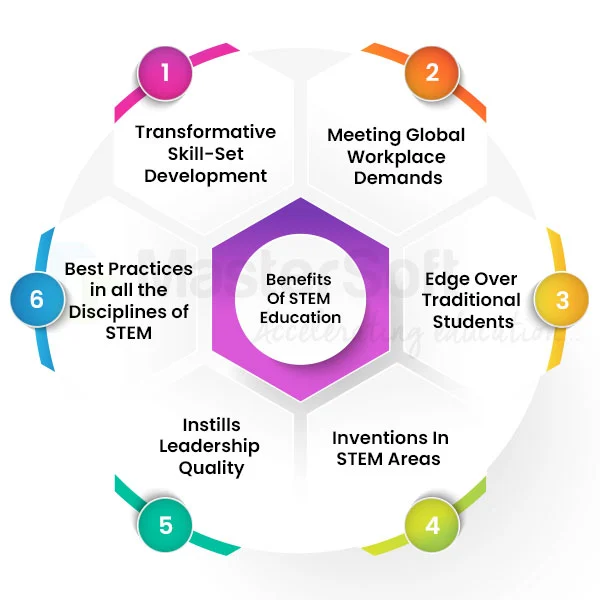
- Critical Thinking and Problem-Solving: STEAM education cultivates critical thinking skills, problem-solving abilities, and analytical reasoning, preparing students to tackle real-world challenges and adapt to a rapidly changing world.
- Collaboration and Communication: STEAM education emphasizes teamwork, collaboration, and effective communication skills, as students work together to design and implement projects, share ideas, and present their findings to others.
- Preparation for Future Careers: STEAM education equips students with the knowledge, skills, and competencies needed for success in the 21st-century workforce, including STEM-related fields such as technology, engineering, healthcare, and environmental science.
Implementation of STEAM Education:
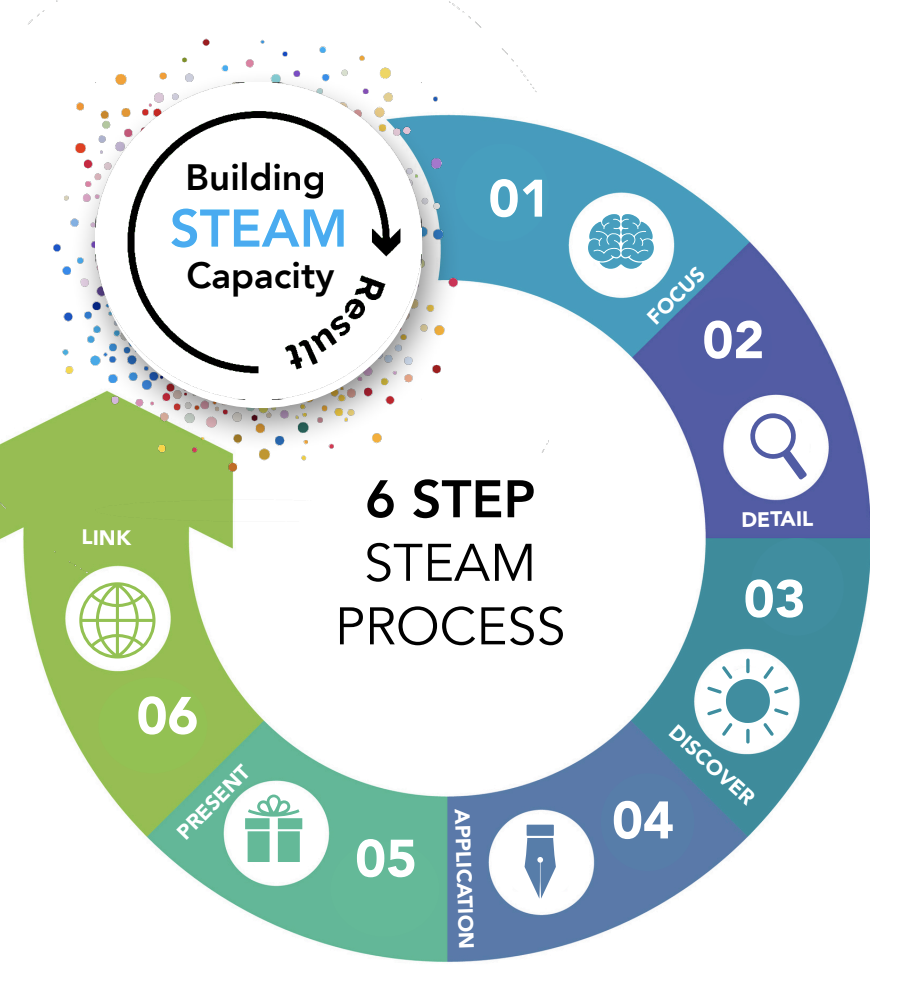
- Project-Based Learning (PBL): Project-based learning is a cornerstone of STEAM education, where students work on hands-on projects and design challenges that integrate concepts from science, technology, engineering, arts, and mathematics.
- STEAM Labs and Makerspaces: STEAM labs and makerspaces provide students with access to tools, equipment, and resources for hands-on experimentation, prototyping, and invention, fostering creativity and innovation.
- Integration of Technology: Technology plays a central role in STEAM education, providing students with access to digital tools, software applications, and online resources for learning, collaboration, and exploration.
- Community Partnerships: Collaboration with industry partners, universities, museums, and community organizations can enrich STEAM education by providing students with opportunities for real-world experiences, mentorship, and exposure to STEM-related careers.
Advantages of STEAM Education:
- Fosters Creativity and Innovation: By integrating arts and design thinking into STEM disciplines, STEAM education nurtures creativity, imagination, and innovation. Students are encouraged to explore alternative perspectives, think critically, and approach problems with creativity and ingenuity.
- Promotes Critical Thinking and Problem-Solving: STEAM education emphasizes inquiry-based learning and hands-on experimentation, fostering critical thinking skills and problem-solving abilities. Students learn to ask questions, make observations, analyze data, and draw evidence-based conclusions.
- Encourages Interdisciplinary Learning: STEAM education breaks down traditional silos between subjects, encouraging students to make connections between science, technology, engineering, arts, and mathematics. This interdisciplinary approach helps students develop a holistic understanding of complex concepts and phenomena.
- Prepares Students for the Future Workforce: In an increasingly technology-driven world, STEAM education equips students with the knowledge, skills, and competencies needed for success in the 21st-century workforce. Students gain proficiency in STEM-related fields such as technology, engineering, healthcare, and environmental science, preparing them for a wide range of career opportunities.
- Enhances Digital Literacy and Technological Fluency: STEAM education incorporates technology as a central component, providing students with opportunities to develop digital literacy, coding skills, and technological fluency. Students learn to use digital tools, software applications, and programming languages to create, innovate, and communicate effectively in a digital world.
- Fosters Collaboration and Communication: STEAM education emphasizes teamwork, collaboration, and effective communication skills. Students work together on hands-on projects, design challenges, and real-world problem-solving activities, learning to share ideas, collaborate with peers, and present their findings to others.
- Cultivates a Growth Mindset: STEAM education promotes a growth mindset, encouraging students to embrace challenges, persist in the face of setbacks, and view failure as an opportunity for learning and growth. Students develop resilience, confidence, and a willingness to take risks, essential qualities for success in academic and professional settings.
CONCLUSION:
In conclusion, STEAM education represents a transformative approach to teaching and learning that integrates Science, Technology, Engineering, Arts, and Mathematics into a cohesive and interdisciplinary framework. By fostering creativity, critical thinking, and collaboration, STEAM education empowers students to become lifelong learners, innovative problem-solvers, and responsible global citizens.
- Through hands-on experimentation, inquiry-based learning, and real-world application of knowledge, STEAM education prepares students for success in a rapidly changing world. By engaging in cross-disciplinary projects, robotics competitions, data analysis challenges, and artistic expression, students develop the skills, competencies, and mindsets needed to thrive in the 21st-century workforce.
- Moreover, STEAM education goes beyond academic achievement, emphasizing the ethical and social implications of technology and innovation. By exploring topics such as privacy, security, equity, and sustainability, students learn to critically evaluate the societal impacts of their work and decisions, becoming thoughtful and informed stewards of technology.
As we look to the future, the importance of STEAM education will only continue to grow. Advances in technology, globalization, and social change demand innovative approaches to education that prepare students for the challenges and opportunities of tomorrow's world. By embracing emerging trends, fostering collaboration, and promoting lifelong learning, STEAM educators can inspire the next generation of innovators, leaders, and changemakers, shaping a brighter future for all.
Comments
Post a Comment